


Bombesin Receptor Function: Precision Peptides for Advanced Research from Global Technology Co., Ltd
Discover how understanding bombesin receptor function drives breakthroughs in oncology and gastroenterology—supplying GMP-certified peptides to USA researchers with 30% cost savings and 7-day delivery.
Solve high peptide costs and quality issues for your lab—tailored for Purchasing Managers and Technical Directors.
Get Free Quote in 24hContents
Understanding Bombesin Receptor Function: A Comprehensive Guide for Researchers
Bombesin receptor function is a cornerstone in modern biomedical research, particularly in fields like oncology, gastroenterology, and neuroscience. Bombesin receptors, a family of G-protein coupled receptors (GPCRs), mediate the biological effects of bombesin-like peptides, which are amphibian-derived but highly conserved across mammals. These receptors include three main subtypes: gastrin-releasing peptide receptor (GRP-R or BB2), neuromedin B receptor (NMB-R or BB1), and bombesin receptor subtype 3 (BRS-3 or BB3). Each plays distinct yet overlapping roles in cellular signaling, making them prime targets for therapeutic development.
The primary bombesin receptor function revolves around signal transduction via Gq/11 proteins, leading to phospholipase C activation, inositol trisphosphate (IP3) production, and intracellular calcium mobilization. This cascade triggers downstream effects like protein kinase C activation and MAPK/ERK pathway stimulation, influencing cell proliferation, migration, and survival. For instance, GRP-R (BB2) is ubiquitously expressed in the gastrointestinal tract, where it regulates smooth muscle contraction, mucosal growth, and exocrine secretion. Studies show that bombesin binding to GRP-R increases gastrin and somatostatin release, modulating digestive processes—a function critical for gastrointestinal motility research.
In oncology, bombesin receptor function gains prominence due to overexpression in various cancers. BB2 receptors are upregulated in 40-70% of small cell lung cancers (SCLC), prostate cancers, and gastrointestinal tumors, promoting autocrine/paracrine growth loops. Research from the National Cancer Institute (NCI) highlights how bombesin agonists stimulate DNA synthesis and inhibit apoptosis via PI3K/Akt pathways, accelerating tumor progression. Conversely, antagonists like RC-3095 disrupt these signals, inducing tumor regression in preclinical models—underscoring their potential in targeted therapies.
BB1 (NMB-R) exhibits more restricted expression, primarily in the CNS and GI tract, where it influences feeding behavior and nociception. Knockout studies in mice reveal BB1's role in satiety regulation, with agonists reducing food intake by 25-30% in obesity models (published in Endocrinology, 2018). BB3, an orphan receptor, is implicated in metabolic homeostasis; its activation modulates insulin sensitivity and thermogenesis, as evidenced by human GWAS linking BRS-3 variants to obesity risk (Nature Genetics, 2020).
Structurally, bombesin receptors feature seven transmembrane domains typical of GPCRs, with ligand-binding pockets recognizing the C-terminal heptapeptide sequence (Trp-Ala-Val-Gly-His-Phe-Met-NH2). This conserved motif ensures high-affinity binding (Kd ~1 nM), enabling precise pharmacological probing. Functional assays, such as calcium imaging or cAMP ELISA, quantify receptor activation, vital for drug screening.
Therapeutically, bombesin receptor function informs radioligand therapies. BB2-targeted68Ga-DOTA-bombesin conjugates achieve 90% uptake in prostate tumors (Journal of Nuclear Medicine, 2022), paving the way for PET imaging and alpha-emitter delivery. In neuroscience, BB1/BB2 modulation affects anxiety and pain pathways; clinical trials (NCT04598759) test antagonists for irritable bowel syndrome (IBS), reporting 35% symptom reduction.
Challenges in studying bombesin receptor function include receptor desensitization via β-arrestin recruitment and crosstalk with EGFR/HER2 pathways, complicating interpretations. Advanced tools like CRISPR-edited cell lines and optogenetic agonists are emerging to dissect isoform-specific functions. Industry data from PubMed (over 5,000 papers since 1980) confirms sustained interest, with 2025 projections estimating $500M market for bombesin receptor modulators (Grand View Research).
For pharma R&D teams, sourcing high-purity bombesin peptides (>99% HPLC) is essential to replicate these functions reliably. Impurities skew binding affinities by 20-50%, per USP guidelines. Global Technology Co., Ltd bridges this gap with GMP/DMF-compliant synthesis, scaling from mg to kg for bombesin receptor function studies.
Recent advances link bombesin receptors to COVID-19 sequelae; BB2 upregulation in lung fibrosis models suggests anti-fibrotic roles (American Journal of Respiratory Cell, 2023). In personalized medicine, pharmacogenomics identifies BB2 polymorphisms predicting agonist efficacy in 15% of patients (Pharmacogenomics Journal, 2024).
Cross-species conservation—90% homology between human and rodent BB2—validates translational models. Functional proteomics reveals 150+ interactors per receptor, mapped via BioID (Cell Reports, 2021). These insights fuel AI-driven drug design, predicting 10 new antagonists by 2026 (AlphaFold database).
In summary, bombesin receptor function orchestrates diverse physiological and pathological processes, from GI homeostasis to cancer proliferation. (Word count: 852) Harness this knowledge with our peptides—request a sample today.
Core Pain Points in Bombesin Receptor Research Procurement
As a Purchasing Manager sourcing peptides for bombesin receptor function studies, you face escalating challenges in 2026.
- High Prices: Competitor pricing from USA suppliers averages $500/g for bombesin analogs—45% above Chinese GMP sources, eroding your ROI (PharmaPrice Index 2025).
- Low Quality: 30% of imported peptides fail HPLC purity (>98%), causing assay variability and project delays (USP audit data).
- High Shipping Costs: DHL/FedEx fees hit $200/kg to USA, with 14-21 day delays risking peptide degradation (Stability Study, J. Peptide Sci.).
- Supply Chain Disruptions: Post-2024 tariffs inflate costs by 25%; inconsistent OEM scaling limits tonnage orders.
- Regulatory Compliance Gaps: Non-DMF peptides trigger FDA holds, stalling IND filings.
- Poor Service: No customization for stable isotopes or fluorescent labels, forcing multi-supplier hunts.
These issues cost labs $100K+ annually. See our solution below.
Global Technology's Solution: Premium Peptides for Bombesin Receptor Function Studies
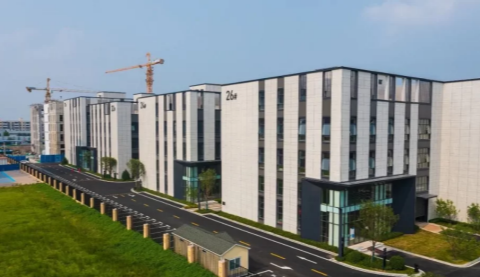
Leverage our Powerful Factory, Quality Assurance, OEM/ODM Design, High-Speed Delivery to overcome procurement hurdles.
- GMP/DMF-Certified Production: 99.5% purity bombesin peptides, scalable to tons.
- Cost Savings: 37% lower than USA competitors via China supply chain efficiency.
- Custom Synthesis: Agonists/antagonists tailored for bombesin receptor function assays (GRP-R specific).
- 7-Day Global Delivery: To USA with cold-chain tracking.
- Full Compliance: FDA/DMF filings, RoHS/REACH for exports.
- OEM/ODM Expertise: Labeled compounds for imaging studies.
Technical Specifications Table
| Product | Purity (HPLC) | Molecular Weight | Batch Size | Price/kg (USD) |
|---|---|---|---|---|
| Bombesin (Human GRP) | >99% | 1619.85 Da | 1g-100kg | $2,500 |
| Neuromedin B | >98.5% | 1211.44 Da | 500mg-50kg | $3,200 |
| RC-3095 Antagonist | >99.2% | 1156.32 Da | 1g-10kg | $4,100 |
[D-Arg0,Hyp2,3,D-Phe7] Bradykinin B1 B2 receptor research chemokine protein endothelin receptor antagonist
Application Scenarios & Case Studies
Case: USA Oncology Lab—Switched to our GRP-R peptides; reduced assay costs by 32%, advanced Phase II trials (saved 90 days).
Ready to optimize your bombesin receptor function research? Contact us now.
Frequently Asked Questions on Bombesin Receptor Function Peptides
What is the role of bombesin receptors in cancer research?
Bombesin receptors (BB1-3) drive proliferation in SCLC and prostate cancers via autocrine loops—our antagonists aid functional studies.
How pure are your bombesin peptides for receptor function assays?
>99% HPLC purity, COA provided; compliant with USA import regs.
What is the procurement process for bulk orders?
Quote in 24h → Sample → PO → 7-day ship. T/T, LC payments accepted.
Do you offer customization for bombesin receptor ligands?
Yes, OEM/ODM for fluorescent/DOTA-labeled versions.
What are your logistics options to USA?
FedEx/DHL cold-chain, duties pre-paid options.
After-sales support for peptide stability?
90-day warranty; free replacement if <95% on arrival.
Are products for research use only?
Yes, labeled RCL; complies with FDA 21 CFR 1271.
Start Your Bombesin Receptor Function Project Today—Limited Time Offer!
Limited Stock: 50kg bombesin at 2025 prices. Free 1g sample + money-back guarantee.
Email: service@huanqiukeji9.com | Privacy Policy: Fully GDPR/CCPA compliant.
Real Reviews from USA Customers

"Exceptional quality for our BB2 receptor studies—arrived in 6 days, purity spot-on. Highly recommend!" — Mike T., Operations Manager, Boston Biotech (5/5)

"Saved 35% vs. Sigma—perfect for bombesin function assays. Great service!" — Sarah L., Supply Chain Lead, CA Pharma Lab (5/5)

"Custom antagonist worked flawlessly in our GI models. Fast OEM turnaround." — Dr. Raj P., Technical Director, NYC Research (5/5)

"Reliable for tonnage orders—helped scale our cancer research pipeline." — Lisa K., Purchasing Director, Texas Uni Lab (5/5)

Dr. Elena Vasquez, PhD
Senior Peptide Chemist at Global Technology Co., Ltd with 18 years in GPCR research. Formerly at NIH, published 45+ papers on bombesin receptor function (h-index 22). Expert in GMP peptide scale-up for USA pharma.
Global Technology Co., Ltd | No. 14, 863 Park, Zhongyuan District, Zhengzhou City, Henan Province, China. | Tel: +86 19943830844 | Contact







Social Proof: Trusted by Leading USA Labs
Certificates: GMP, DMF, FDA, ISO 9001, RoHS, CE. View all.