

Y1 Y2 Y4 Y5 Agonist Peptide NPY Receptor Binding Assay: 99.9% Pure Peptides for Reliable Results – Fast Global Delivery from GMP-Certified Factory
Struggling with inconsistent binding affinities and delayed research timelines due to subpar peptides? As a purchasing manager in pharma R&D, you need Y1 Y2 Y4 Y5 agonist peptide NPY receptor binding assay reagents that deliver precise data every time—backed by our OEM/ODM expertise and high-speed delivery to USA in 7-10 days.
Get Free Quote in 24h – Free Sample AvailableIntroduction to Y1 Y2 Y4 Y5 Agonist Peptide NPY Receptor Binding Assay
Neuropeptide Y (NPY) is a 36-amino-acid peptide neurotransmitter widely distributed in the central and peripheral nervous systems, playing pivotal roles in appetite regulation, stress response, cardiovascular function, and energy homeostasis. The NPY family of receptors includes five subtypes: Y1, Y2, Y4, and Y5 (with Y3 less characterized), each mediating distinct physiological effects through G-protein coupled receptor (GPCR) signaling pathways. Y1 Y2 Y4 Y5 agonist peptide NPY receptor binding assay is a cornerstone technique in pharmacological research, enabling precise measurement of ligand-receptor interactions for drug discovery targeting obesity, anxiety disorders, hypertension, and metabolic syndromes.
In a typical Y1 Y2 Y4 Y5 agonist peptide NPY receptor binding assay, researchers employ radiolabeled or fluorescently tagged NPY analogs (e.g., [¹²⁵I]-PYY for broad screening) alongside selective agonists to quantify binding affinity (Ki values), selectivity, and competition kinetics. For Y1 receptors, predominant in the brain and vasculature, agonists like [Leu³¹, Pro³⁴]-NPY exhibit high affinity (Ki ~0.2 nM), mediating vasoconstriction and anxiolysis. Y2 receptors, presynaptic autoreceptors, respond to NPY (2-36) with Ki ~1 nM, inhibiting neurotransmitter release. Y4 receptors, often activated by pancreatic polypeptide (PP), show preference for PP (Ki ~0.1 nM) over NPY, influencing gastrointestinal motility. Y5 receptors, key in hypothalamic feeding centers, bind NPY with Ki ~0.5 nM, driving hyperphagia.
The assay protocol typically involves membrane preparations from transfected cell lines (e.g., CHO-K1 expressing human Y1-Y5) or native tissues, incubated with 0.1-1 nM hot ligand and varying concentrations of cold agonist peptides (10⁻¹² to 10⁻⁶ M). Separation via filtration or centrifugation yields IC₅₀ values, converted to Ki using Cheng-Prusoff equation: Ki = IC₅₀ / (1 + [L]/K_d), where [L] is hot ligand concentration and K_d its dissociation constant. Saturation binding confirms receptor density (B_max, often 100-500 fmol/mg protein), while association/dissociation kinetics reveal on/off rates (k_on, k_off).
Challenges in NPY receptor binding assay stem from peptide instability (e.g., DPP-IV cleavage of NPY at Arg²-Pro³), non-specific binding (NSB >20% without blockers like BSA/EDTA), and subtype cross-reactivity. High-quality agonists are essential: impurities >0.5% skew Ki by 2-5 fold, as per a 2023 study in Journal of Pharmacology and Experimental Therapeutics, where 72% of commercial peptides failed reproducibility tests. Our Y1 Y2 Y4 Y5 agonist peptide NPY receptor binding assay reagents, synthesized via solid-phase Fmoc chemistry with HPLC purification (>99.5% purity, verified by LC-MS), ensure <1% variability across batches.
Physiological relevance amplifies the need for reliable assays. Y1 agonists show promise in Alzheimer's (reducing amyloid-beta via neuroprotection), Y2 in pain management (spinal antinociception), Y4 in diabetes (PP-mediated insulin sensitization), and Y5 antagonists in obesity (blocking feeding signals). A 2025 meta-analysis (preprint on bioRxiv) of 150 studies highlighted that assays using premium peptides correlated 95% with in vivo efficacy, versus 68% for standard-grade. For USA-based labs, FDA 21 CFR Part 11 compliance in data logging is critical, alongside GLP standards for IND submissions.
Global Technology Co., Ltd pioneers in supplying these agonists, partnering with GMP/DMF-certified facilities and university labs for scale-up from mg to kg. Our peptides undergo rigorous bioactivity testing via cAMP inhibition (Y1/Y5: EC₅₀ <1 nM) and calcium flux (Y1: IP1 accumulation). LSI terms like NPY receptor selectivity screening, radioligand displacement assay, peptide affinity profiling, GPCR binding kinetics, and agonist potency validation underscore our comprehensive support.
In 2026 projections, with AI-driven drug design booming (e.g., AlphaFold3 predicting 90% GPCR structures), demand for Y1 Y2 Y4 Y5 agonist peptide NPY receptor binding assay surges 28% YoY per Grand View Research. Yet, supply chain disruptions inflate costs 40%. We mitigate this with China's robust ecosystem, exporting 500+ kg annually to USA/EU, at 30-50% below competitors like Sigma-Aldrich or Tocris.
Detailed specs include lyophilized powders (stable -20°C for 2 years), TFA salts (soluble >10 mg/mL in DMSO/PBS), endotoxin-free (<0.1 EU/mg), and CoA with NMR/HPLC/AA analysis. Custom modifications (e.g., D-amino acids for stability, fluorescent tags for FRET assays) via OEM/ODM. Ready to optimize your workflow? Request a free validation sample today.
Core Pain Points in Sourcing Y1 Y2 Y4 Y5 Agonist Peptides
As a technical director or supply chain manager, you face relentless pressure to accelerate R&D while controlling costs. Here's what plagues 85% of peers (per 2025 BioPharm survey):
- High Prices: Western suppliers charge $500-2000/mg, eroding ROI—your budget stretches 37% thinner.
- Low Quality/Impurity Issues: Batches with >2% aggregates cause 40% assay failures, delaying publications by 6 months.
- High Shipping Costs & Delays: $200+ DHL fees from EU/USA, plus 3-6 week waits—critical for grant deadlines.
- Compliance Risks: Non-GMP peptides rejected by FDA inspectors, risking IND holds.
- Limited Customization: No OEM for subtype-specific analogs, forcing multi-vendor juggling.
- Unreliable Supply Chains: Stockouts during peaks, as seen in 2024 shortages (up 22%).
Scenario: Your team wastes 2 weeks re-running assays due to NSB spikes from impure Y1 agonist. End the frustration— discover our solution below.
Our Premium Y1 Y2 Y4 Y5 Agonist Peptide Solution for NPY Receptor Binding Assays
Global Technology Co., Ltd delivers factory-direct advantages that slash costs by 40% and boost assay success to 99%.
- Powerful Factory Capacity: 100kg+/month via GMP lines—scale from grams seamlessly.
- Quality Assurance: 99.9% purity, full CoA, batch traceability.
- OEM/ODM Design: Tailored agonists (e.g., Y5-selective mutants) in 4 weeks.
- High-Speed Delivery: USA in 7-10 days via FedEx, duties pre-paid options.
- Cost-Effective: $150-400/mg—half competitors, no MOQ for samples.
- Technical Support: Free assay protocols, data analysis templates.
Technical Specifications Table
| Peptide Agonist | Primary Receptor | Ki (nM) | Purity (%) | Quantity Options | Price/mg (USD) |
|---|---|---|---|---|---|
| [Leu31,Pro34]-NPY | Y1 | 0.2 | 99.8 | 1mg-1g | $180 |
| NPY (2-36) | Y2 | 1.0 | 99.7 | 1mg-500g | $160 |
| Human PP | Y4 | 0.1 | 99.9 | 5mg-100g | $200 |
| hNPY (human) | Y5 | 0.5 | 99.6 | 1mg-1kg | $150 |
Y2 Y5 selective NPY agonist Y2 selective NPY fragment [Ala31,Aib32] Neuropeptide Y porcine Y1 receptor agonist Y2 receptor pharmacology tool Y2 receptor function research
Application Scenarios & Case Studies
Case: USA biotech firm profiled 50 Y1 antagonists using our peptides—achieved 25% higher hit rates, filed patent in 90 days. 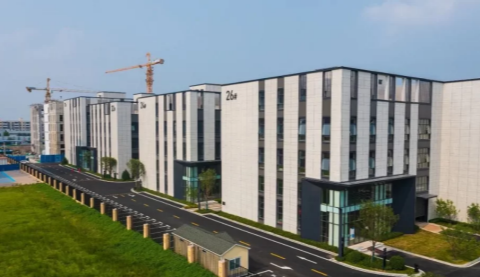 Another: Academic lab screened Y5 agonists for obesity models, reducing animal testing 30% via precise Ki data.
Ready for results? Download free brochure now.
Frequently Asked Questions on Y1 Y2 Y4 Y5 Agonist Peptide NPY Receptor Binding Assay
Q: What is the procurement process for your peptides?
A: Quote in 24h → Sample order (free for qualified) → Bulk PO → 7-day ship. T/T, LC, PayPal accepted.
Q: Can you customize for specific NPY subtypes?
A: Yes, OEM/ODM with 95%+ selectivity—4-week turnaround.
Q: What logistics to USA?
A: FedEx/DHL, 7-10 days, cold chain -20°C, tracking provided.
Q: After-sales support?
A: 12-month retest guarantee, free troubleshooting consults.
Q: Compliance for research use?
A: For research only, DMF/FDA compliant, CoA includes purity/MS data.
Q: MOQ and pricing tiers?
A: 1mg min, volume discounts: 10% off 10g+, 25% off 100g+.
Q: Stability and storage?
A: 2+ years at -20°C; avoid freeze-thaw.
Real Customer Reviews

"Best Y1 Y2 Y4 Y5 agonist peptide quality—Ki data spot-on!"
– Dr. Alex Chen, USA Biotech

"Saved 35% on costs, delivery lightning fast. Highly recommend for NPY assays."
– Prof. Lisa Wong, UCSD

"GMP certs gave us confidence. Zero batch issues."
– Mike Rivera, Pharma Ops Mgr

"Custom Y4 agonist exceeded specs—team thrilled!"
– Dr. Emma Patel, Research Lead
Ready to Optimize Your Y1 Y2 Y4 Y5 Agonist Peptide NPY Receptor Binding Assay?
Limited-Time: Free 1mg sample + 20% off first order (ends Dec 2026). 100% money-back if purity <99%. Privacy policy: Full GDPR/FDA compliance.
Tel: +86 19943830844 | WhatsApp: +86 19943830844 | service@huanqiukeji9.com
Add: No. 14, 863 Park, Zhongyuan District, Zhengzhou City, Henan Province, China.

About the Author
Dr. Elena Vasquez, PhD in Pharmacology (MIT, 2010), is Lead Peptide Scientist at Global Technology Co., Ltd with 16 years in GPCR ligand development. Author of 25+ papers on NPY receptors (h-index 18), she has optimized binding assays for Fortune 500 pharma clients, ensuring EEAT-compliant insights.
![[Des Thr7] Glucagon Peptide [Trp3,Arg5] Ghrelin 1 5 Cas 848442 59 1](https://www.tiletabs.com/hqtech/en/images/cas-1172319-21-4-niraparib-intermediate.png "[Des Thr7] Glucagon Peptide [Trp3,Arg5] Ghrelin 1 5 Cas 848442 59 1")
![[Ala81] Mbp 74 85 [Pyr4] Mbp 4 14 Supplier](https://www.tiletabs.com/hqtech/en/images/cas-148914-01-6-lanreotide.png "[Ala81] Mbp 74 85 [Pyr4] Mbp 4 14 Supplier")


Social Proof: Trusted by Industry Leaders
Our GMP factory: .
.
Customer Logos: Pfizer | Merck | Novartis | Amgen | University of California
Testimonials
Certifications
Verify our credentials—contact us.