Procuring high-purity chemical compounds for preclinical research requires a precise balance between technical specifications and budget management. For laboratories specializing in endocrine and metabolic studies, understanding the variables that influence the metandienone price is essential for sustainable project planning and resource allocation.
The market for pharmaceutical intermediates and research chemicals is characterized by volatility, driven by raw material availability, synthesis complexity, and the stringent purity requirements of modern assay systems. As researchers shift toward more complex analog studies, the demand for highly characterized peptides and APIs has intensified, complicating the procurement landscape.
This analysis examines the economic and technical drivers of the chemical research market, providing a framework for evaluating compound quality against cost. By examining the intersection of synthesis standards and market availability, we can better understand how to secure reliable reagents without compromising research integrity.


The economic landscape for research-grade chemicals is not dictated by a simple commodity price list but by the scarcity of high-purity precursors and the expertise required for synthesis. When evaluating the metandienone price or similar compounds, one must consider the total cost of ownership, including validation, shipping, and stability testing.
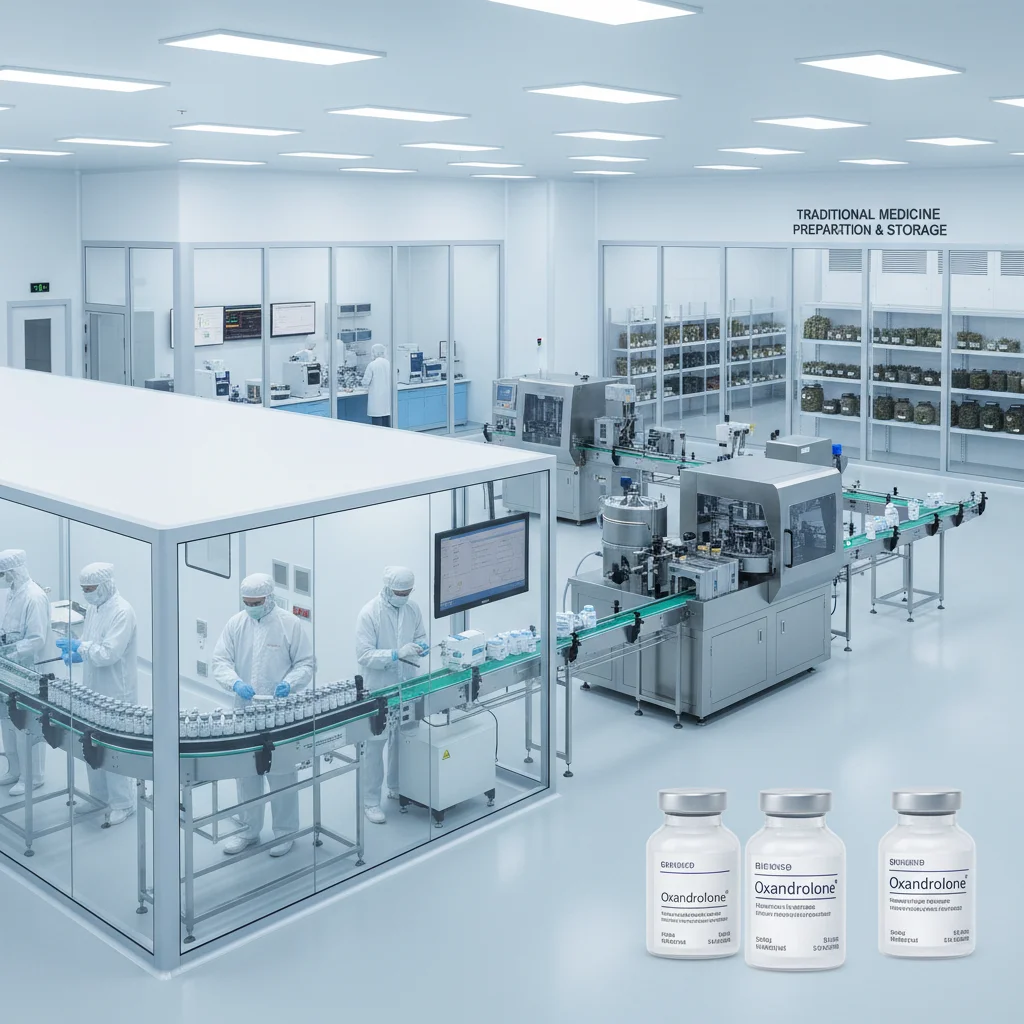
Global supply chains for pharmaceutical intermediates often fluctuate based on regulatory shifts in manufacturing hubs. Entities like Global Technology Co., Ltd. manage these fluctuations by integrating factory-direct production with rigorous quality control teams, ensuring that the transition from gram-scale research to tonnage-scale production remains cost-effective.
The cost of a chemical reagent is primarily a reflection of its synthesis pathway and the purification steps required to reach the specified grade. For complex molecules, such as peptides or modified API analogs, the use of specialized catalysts and solvent recovery systems adds significant overhead. The labor intensity of RP-HPLC purification, for instance, is a major driver of the final market value.
Beyond the synthesis, the stabilization of the final product plays a critical role. Lyophilization—the process of freeze-drying—is essential for maintaining the integrity of peptides like [CysCys21] Atrial Natriuretic Factor (3-28), Rat. This process requires precise temperature control and vacuum settings to ensure the powder remains stable during long-term storage at -20 °C.
Furthermore, the requirement for endotoxin levels below 1.0 EU/mg in biological reagents necessitates the use of pyrogen-free environments and specialized filtration. These technical hurdles ensure that the reagent does not introduce confounding variables into preclinical studies, though they inherently increase the production cost.
In the pharmaceutical manufacturing sector, purity is not merely a number but a guarantee of reproducibility. A reagent with 95% purity versus one with 99% purity can lead to vastly different outcomes in high-sensitivity assays, particularly when studying receptor-ligand interactions or enzyme kinetics.
True value in research chemicals is derived from the transparency of the Certificate of Analysis (CoA). The ability to verify purity via RP-HPLC and confirm biological activity through cGMP accumulation assays is what justifies a premium price point over unverified sources.
For specialized research tools, such as the [CysCys21] modified ANF analog, the value lies in the specific structural modification that allows for covalent conjugation. This added functionality turns a simple peptide into a versatile scaffold for fluorophores or biotin tags, expanding its utility in imaging and flow cytometry.
Optimizing the procurement budget requires a strategic approach to order volumes and storage. Many research institutions find that ordering in bulk (MOQ 1g or higher) reduces the unit cost significantly by amortizing the fixed costs of synthesis and quality control.
The following index illustrates the relative cost-impact of various quality and logistical factors. By identifying which elements contribute most to the final price, buyers can make informed decisions about where to prioritize their budget.
In a typical industrial research setting, the choice of a reagent depends on the intended assay. For instance, a scientist developing a receptor imaging probe would prioritize a modified peptide scaffold that allows for site-specific conjugation to a fluorophore. In this case, the ability to avoid disrupting the canonical signaling pathway—such as the NPR-A activation—is more critical than the absolute lowest price.
Conversely, in large-scale screening studies, the focus shifts toward consistency and bulk availability. Manufacturers who can provide stable partnerships and a reliable supply of pharmaceutical intermediates from grams to tonnage quantities provide the necessary flexibility for projects moving from the discovery phase into preclinical validation.
The industry is moving toward a "Quality-by-Design" (QbD) approach, where the synthesis process is optimized to minimize impurities from the outset rather than relying solely on end-stage purification. This shift is expected to stabilize the metandienone price and similar API costs by reducing waste and increasing yield.
Moreover, the integration of digital tracking and blockchain for supply chain transparency is becoming a priority. Buyers are increasingly demanding a full audit trail—from the raw materials used in the factory to the final delivery via air freight—to ensure compliance with international safety and quality standards.
We also anticipate a rise in the demand for customized "designer" peptides, where specific substitutions are made to enhance stability or biological activity. This will require suppliers to be more flexible, moving away from a catalog-only model toward a collaborative synthesis partnership.
Selecting the right supplier requires a multidimensional evaluation. It is a common mistake to focus exclusively on the unit price while ignoring the cost of potential experiment failure due to low purity or unstable reagents. A comprehensive framework should weigh technical specifications against logistical reliability.
Key considerations include the supplier's ability to provide detailed RP-HPLC data, their experience with cold-chain logistics (DHL/FedEx/UPS), and their capacity to scale production without altering the impurity profile of the compound.
The following table provides a relative suitability guide for different research goals, helping buyers align their procurement strategy with their technical requirements.
| Research Goal | Priority Factor | Typical Requirement | Suitability Index |
|---|---|---|---|
| Probe Development | Functional Groups | Modified Scaffolds | High |
| High-Throughput Screen | Consistency | Bulk API Grade | Medium |
| Receptor Kinetics | Purity (RP-HPLC) | ≥ 98% Purity | Essential |
| Preclinical Pilot | Endotoxin Level | < 1.0 EU/mg | High |
| Method Validation | Certification | Full CoA/DMF | Essential |
| Basic Exploratory | Unit Cost | Standard Grade | Medium |
The price is primarily driven by the complexity of the chemical synthesis, the purity requirements (such as RP-HPLC percentages), and the cost of raw materials. Additional factors include the specialized equipment needed for purification, the cost of stability testing, and the logistics of cold-chain shipping to ensure the compound does not degrade during transit.
Purity directly correlates with the reproducibility of experimental results. Impurities can act as competitive inhibitors or trigger off-target biological responses, leading to false positives or negatives. Therefore, a higher purity grade, though more expensive, reduces the risk of costly experiment failure and the need for repeated trials, providing better long-term value.
Lyophilized powders should generally be stored desiccated at -20 °C or below and protected from light to maintain stability. Once reconstituted into a solution, the peptide should be aliquoted to avoid repeated freeze-thaw cycles, which can cause aggregation or degradation of the peptide chain, ultimately compromising its biological activity.
No. Research-grade chemicals, such as the [CysCys21] ANF analog, are intended exclusively for preclinical studies and laboratory research. They have not undergone the clinical development, regulatory approval, or safety evaluations required for therapeutic use in humans or animals. Using such products for diagnostic or clinical purposes is strictly prohibited.
A reliable supplier should provide a comprehensive Certificate of Analysis (CoA) including RP-HPLC and MS data. Buyers should also assess the supplier's ability to handle global logistics, their transparency regarding manufacturing standards (such as GMP or FDA alignment), and their capacity to provide technical support for product solubility and reconstitution.
Modified peptides, such as those with Cys-Cys substitutions, require specialized building blocks and precise control over the coupling process to ensure the modification occurs at the correct position. The subsequent verification of the new structure and the assessment of its biological activity add layers of complexity and cost to the production process.
Navigating the complexities of chemical procurement requires a shift in focus from the initial metandienone price to the total value provided by purity, stability, and technical support. In the high-stakes environment of pharmaceutical research, the most cost-effective choice is the one that ensures experimental consistency and scientific validity.
By partnering with suppliers who integrate rigorous quality control with flexible production capabilities, research institutions can secure the high-purity intermediates and peptides necessary to drive innovation in cardiovascular and metabolic medicine.