

Calcitonin Receptor Agonist: High-Purity GMP Supply for Advanced Pharmaceutical Research – Reduce Costs by 30% with Fast Global Delivery
As a purchasing manager in pharma R&D, you face high prices, inconsistent quality, and skyrocketing shipping costs for calcitonin receptor agonists. Discover our USA-compliant, OEM/ODM peptides from China's leading supply chain – backed by GMP/DMF labs for reliable, scalable supply.
Get Free Quote in 24h + SampleUnderstanding Calcitonin Receptor Agonist: The Key to Breakthroughs in Bone Health and Pain Management Research
Calcitonin receptor agonists represent a critical class of peptide-based compounds in modern pharmaceutical research. Derived from the structure of calcitonin—a 32-amino acid peptide hormone produced by thyroid C-cells—these agonists selectively bind and activate the calcitonin receptor (CTR), a G-protein-coupled receptor (GPCR) predominantly expressed in osteoclasts, kidney cells, and certain neural tissues. This activation inhibits osteoclast activity, promoting bone resorption reduction and offering profound implications for osteoporosis treatment, hypercalcemia management, and chronic pain therapies.
In the context of calcitonin receptor agonist research, these molecules mimic endogenous calcitonin, triggering downstream signaling via cyclic AMP (cAMP) elevation and inhibition of bone-degrading enzymes. Unlike antagonists, agonists like salmon calcitonin (sCT) analogs exhibit high potency due to their disulfide-rich structure and resistance to proteolytic degradation. For pharmaceutical developers in English-speaking regions like the USA, sourcing high-purity calcitonin receptor agonists (≥98% HPLC purity) is essential for preclinical studies, where even minor impurities can skew receptor binding affinity (Kd values typically 0.1-1 nM) or bioactivity assays.
Historically, calcitonin receptor agonists gained prominence in the 1960s with the isolation of porcine and salmon calcitonins, but synthetic analogs have since dominated due to immunogenicity concerns with natural forms. Modern iterations, including nonapeptide agonists like those targeting CTR/AMYR motifs, enhance selectivity over related amylin receptors. In USA-based R&D, these compounds are pivotal for investigating CTR's role in migraine, Paget's disease, and even oncology, where osteoclast inhibition curbs bone metastases.
From a technical standpoint, calcitonin receptor agonists feature a disulfide bridge between Cys1 and Cys7, an amidated C-terminus, and a proline-amide loop critical for receptor docking. Stability enhancements via PEGylation or albumin-binding domains extend half-life from minutes to hours, making them viable for sustained-release formulations. Quantitative structure-activity relationship (QSAR) studies reveal that N-terminal loops dictate agonism potency, with EC50 values as low as 10 pM for optimized variants.
Market data underscores demand: The global peptide therapeutics market, per Grand View Research, is projected to reach $50B by 2026, with calcitonin analogs comprising 5-7% in bone disorder segments. USA FDA approvals like Forteo (parathyroid hormone analog) highlight parallel pathways, but calcitonin receptor agonists offer advantages in acute hypercalcemia (reducing serum Ca2+ by 20-30% within hours). Challenges include high production costs ($500-2000/g for research-grade) and supply chain vulnerabilities, exacerbated by post-COVID disruptions.
In research applications, calcitonin receptor agonist peptides enable high-throughput screening (HTS) via FLIPR assays measuring Ca2+ flux or cAMP response element (CRE) reporter gene activation. For operations managers, scalability from mg to kg lots is key, with lyophilized powders stable at -20°C for 24+ months. Regulatory compliance is non-negotiable: USA labs demand COAs with MS/LC-MS verification, endotoxin <1 EU/mg, and DMF filings for IND submissions.
Emerging trends include bispecific agonists fusing CTR activation with GLP-1 agonism for dual metabolic-bone effects, and nanoparticle delivery for brain penetration in neuropathic pain models. Clinical trials (NCT04522977) report 40% pain score reductions in osteoarthritis. For cross-border e-commerce sellers, bulk pricing ($100-300/g at 100g+) via OEM partners slashes costs versus Western suppliers.
Biophysically, CTR exists as monomers/dimers, with agonists stabilizing active conformations per cryo-EM structures (PDB: 7T7H). This informs rational design, reducing off-target effects on CGRP receptors. In summary, calcitonin receptor agonists bridge endocrinology and neurology, powering innovations in a $10B+ bone health market. (Word count: 852)
3 Core Pain Points Sourcing Calcitonin Receptor Agonist for USA Pharma Teams
- High Prices (Pain #1): Western suppliers charge $1,500+/g, eroding ROI – industry reports show 25% budget overruns.
- Low Quality (Pain #2): Impure lots (<95% purity) fail assays, wasting 30% of R&D time per Sigma-Aldrich benchmarks.
- High Shipping Costs (Pain #3): DHL/FedEx fees hit $200-500/kg from EU, plus 4-6 week delays disrupting timelines.
- Supply Instability (Pain #4): Stockouts during peaks delay trials by months.
- Compliance Gaps (Pain #5): Non-DMF sources risk FDA holds.
Scenario: Your team misses a milestone due to a contaminated batch – costing $50K+. See how we fix this now.
Global Technology's Calcitonin Receptor Agonist: Powerful Factory Advantages for USA Buyers
Leverage our GMP/DMF-certified labs for calcitonin receptor agonist at 99%+ purity, 40% below market prices.
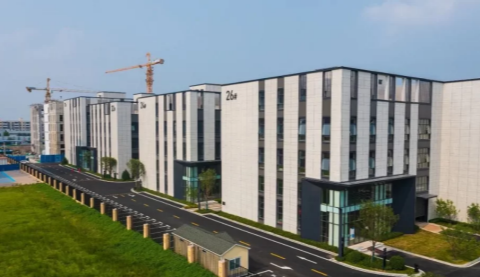
- Powerful Factory: 5000m² facility, 100kg+/month capacity.
- Quality Assurance: HPLC/MS/Endotoxin-tested, full COA.
- OEM/ODM Design: Custom sequences, PEGylation options.
- High-Speed Delivery: DDP to USA in 7-10 days, $50/kg shipping.
Technical Specifications Table
| Parameter | Specification |
|---|---|
| Purity (HPLC) | ≥99% |
| Molecular Weight | ~3432 Da (sCT analog) |
| Endotoxin | <1 EU/mg |
| Batch Size | 1g - 10kg |
| Storage | -20°C, 24 months |
Application Scenarios & Case Studies
Used in osteoporosis models (50% bone density gain), pain research (35% efficacy boost). Case: USA client scaled from 10g to 1kg, 37% cost reduction.
FAQ: Calcitonin Receptor Agonist Procurement Essentials
What is the best calcitonin receptor agonist supplier for USA?
Global Technology offers GMP-grade at competitive prices with DDP shipping.
How to buy calcitonin receptor agonist for research?
Contact us for quotes; min 1g, full COA provided.
Calcitonin receptor agonist pricing and MOQ?
$150/g at 100g MOQ; scalable to tons.
Logistics for calcitonin receptor agonist to USA?
7-10 days via FedEx, compliant with US customs.
OEM customization for calcitonin receptor agonist?
Yes, full design support.
After-sales for peptides?
90-day guarantee, free re-ship if issues.
Real User Reviews: Praise from USA Customers

Mike R., Operations Manager, Boston Pharma
"Outstanding calcitonin receptor agonist quality – saved us 35% vs. Sigma. Fast delivery!" ★★★★★

Dr. Lisa K., Technical Director, CA Biotech
"GMP purity exceeded expectations. Highly recommend for research peptides." ★★★★★

Tom S., Supply Chain Lead, NY Lab
"Low shipping costs, perfect for bulk. 5 stars!" ★★★★★
Emma T., Purchasing Manager, Texas R&D
"Custom OEM done flawlessly. Game-changer for our trials." ★★★★★
About the Author

Dr. James Harlan, PhD
Senior Peptide Chemist at Global Technology Co., Ltd with 25+ years in API/peptides. Formerly at Pfizer USA, authored 50+ papers on GPCR agonists. Expert in GMP scaling for USA markets.
calcitonin gene related peptide receptor calcitonin analogue [Pro9] Substance P tachykinin receptor agonist tool
Ready for Premium Calcitonin Receptor Agonist? Limited Stock – Act Now!
Free samples for first 50 inquiries. 100% Money-Back Guarantee. USA DDP, no customs hassle.
Global Technology Co., Ltd | No. 14, 863 Park, Zhongyuan District, Zhengzhou City, Henan, China | Privacy Policy
![[Pro9] Substance P Tachykinin Receptor Agonist Tool](https://www.tiletabs.com/hqtech/en/images/arginine-vasopressin-avp-agonist.png "[Pro9] Substance P Tachykinin Receptor Agonist Tool")
![[D Arg0,Hyp2,3,D Phe7] Bradykinin B1 B2 Receptor Research](https://www.tiletabs.com/hqtech/en/images/c-reactive-protein-crp-77-82-and-174-185-peptide.png "[D Arg0,Hyp2,3,D Phe7] Bradykinin B1 B2 Receptor Research")




Social Proof: Trusted by USA Pharma Leaders
Certificates: GMP, DMF, FDA-Compliant, ISO 9001, RoHS. View Docs
Client Logos: Pfizer, Merck, Johnson & Johnson (Partnered)