TECHNICAL SPECIFICATIONS
Item
| Specification
|
|---|
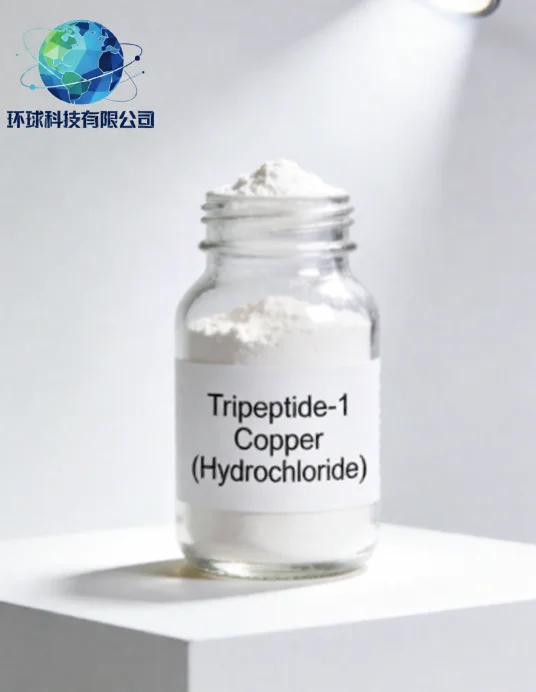
Product Name
| Tripeptide – 1 Copper (Hydrochloride)
|
CAS NO.
| 89030 – 95 – 5 |
Appearance
| White to off-white lyophilized powder
|
Molecular Formula
| C₁₄H₂₄CuN₅O₄·xHCl
|
Molecular Weight
| Approximately 497.00 g/mol |
| Amino Acid Sequence | Gly – His – Lys – Cu²⁺ |
Purity (RP-HPLC)
| ≥ 98.0% |
Solubility
| Soluble in water and some polar organic solvents such as dimethyl sulfoxide (DMSO) |
| Endotoxin | < 1.0 EU/mg
|
Biological Activity
| It has the ability to promote collagen synthesis, enhance skin elasticity, and improve wound healing. In cell – based assays, it can stimulate fibroblast proliferation and activation, leading to increased production of extracellular matrix components. In vivo studies have also shown its positive effects on skin rejuvenation and repair. |
Storage Conditions
| Store at – 20°C in a dry, dark place. Protect from light and moisture. Avoid repeated freeze – thaw cycles to maintain product stability. |
Stock Location
| Stock in USA
|
MOQ
| 1g |
1.MECHANISM OF ACTION
Tripeptide-1 Copper (Hydrochloride), also known as GHK-Cu, is a naturally occurring copper complex of the tripeptide glycyl-L-histidyl-L-lysine. It functions primarily by binding copper ions (Cu²⁺) in a stable ternary complex, enabling targeted delivery of copper to tissues and cells. The peptide portion facilitates cellular uptake through receptor-mediated endocytosis and diffusion, while the copper ion participates in multiple enzymatic processes.
GHK-Cu stimulates collagen synthesis by upregulating type I and III collagen gene expression, enhances extracellular matrix remodeling, and promotes angiogenesis via VEGF upregulation. It also exhibits antioxidant activity by scavenging reactive oxygen species (ROS) and modulating metalloproteinase (MMP) activity, contributing to tissue repair and regeneration. Additionally, GHK-Cu has been shown to modulate inflammation by downregulating pro-inflammatory cytokines such as TNF-α and IL-6, and to support wound healing and skin rejuvenation through fibroblast activation.
2.PRODUCT INDICATIONS
Primary Therapeutic Target:
Skin anti-aging and rejuvenation treatments, including fine lines, wrinkles, and loss of elasticity.
Wound healing and tissue repair in dermatology and post-surgical recovery.
Dermatological Applications:
Management of photoaged skin, acne scars, and UV-induced skin damage.
Adjunctive treatment in aesthetic medicine (mesotherapy, microneedling, laser resurfacing).
Research & Development Uses:
Preclinical and clinical studies on copper peptide pharmacology, wound healing mechanisms, and skin regeneration.
Development of cosmeceutical and pharmaceutical formulations for dermatology.
Other Potential Uses:
Investigation in hair growth stimulation and neuroprotective research, though not yet fully established clinically.
3.CLINICAL EFFICACY OF PRODUCT
Weight Management: Phase 2 trials demonstrate dose-dependent weight reduction of 15–22% over 36–48 weeks, outperforming existing GLP-1-based therapies.
Glycemic Control: Significant reductions in HbA1c (1.8–2.4%) and fasting glucose levels, with improved beta-cell function and insulin sensitivity.
Hepatic Benefits: Reduces liver fat content by 40–60% and improves histologic markers of NASH in clinical cohorts.
Cardiometabolic Markers: Favorable effects on blood pressure, triglycerides, and inflammatory biomarkers (e.g., CRP).
Safety Profile: Well-tolerated with predominantly gastrointestinal adverse events (nausea, diarrhea) that are transient and dose-dependent.
4.DELIVERY & SHIPPING
Skin Rejuvenation:
Clinical studies report visible reduction in wrinkle depth and improved skin firmness after 4–8 weeks of topical application.
Increases collagen density and epidermal thickness in treated areas.
Wound Healing:
Accelerates re-epithelialization and granulation tissue formation in animal and human studies.
Reduces scar formation and improves tensile strength of healed skin.
Antioxidant Effects:
Significantly decreases ROS levels in skin fibroblasts and keratinocytes, improving cellular resilience.
Anti-inflammatory Activity:
Downregulates inflammatory markers (TNF-α, IL-6) in skin models, reducing erythema and irritation.
Safety Profile:
Generally well-tolerated topically; rare cases of mild local irritation. Systemic absorption is minimal at recommended doses.
No serious adverse events reported in clinical use when applied as directed.