
Premium Phenyl Acetyl Chloride Supplier: 99% Purity, Fast Global Delivery from China Factory
Struggling with unreliable phenyl acetyl chloride supplies that disrupt your pharmaceutical production? As a trusted B2B partner for USA buyers, we deliver lab-grade chemical with full compliance and 30% cost savings.
Get Free Quote in 24hComprehensive Guide to Phenyl Acetyl Chloride: Properties, Uses, and Sourcing Essentials
Phenyl acetyl chloride, chemically known as C6H5CH2COCl or 2-phenylacetyl chloride, is a vital organic compound in the realm of pharmaceutical intermediates and fine chemicals. This colorless to pale yellow liquid with a pungent odor serves as a key acylating agent in organic synthesis. Its molecular formula, C8H7ClO, boasts a molecular weight of 154.59 g/mol, making it highly reactive due to the presence of the acid chloride functional group (-COCl) attached to the phenylacetic acid backbone.
In the first moments of your search for reliable phenyl acetyl chloride suppliers, understanding its core properties is crucial. It has a boiling point of approximately 110-112°C at 14 mmHg, a density of 1.195 g/cm³ at 25°C, and is soluble in organic solvents like dichloromethane, ether, and toluene, but reacts vigorously with water or alcohols. This reactivity underscores its utility in acylation reactions, where it converts amines, alcohols, and phenols into the corresponding amides, esters, and phenylacetates—essential steps in synthesizing antibiotics like penicillin derivatives and other APIs.
Historically, phenyl acetyl chloride gained prominence in the mid-20th century during the scale-up of penicillin G production. The side chain of benzylpenicillin is introduced via phenylacetic acid derivatives, and the chloride form accelerates this process under milder conditions. Today, its applications extend to agrochemicals, fragrances, and advanced materials. For instance, in peptide synthesis, it acts as a protecting group precursor, while in the fragrance industry, it's used to create musk-like scents.
From a technical standpoint, purity is paramount. Industrial-grade phenyl acetyl chloride typically achieves 98-99% purity via distillation under vacuum, with impurities like phenylacetic acid or diphenylacetyl chloride controlled below 0.5%. Our production adheres to GMP standards, ensuring 99.5% minimum purity, verified by HPLC and GC-MS analysis. Safety data sheets (SDS) classify it as corrosive (H314), acutely toxic if swallowed (H301), and a skin irritant (H315), necessitating handling in fume hoods with PPE including nitrile gloves and face shields.
Regulatory compliance for USA markets is non-negotiable. As a DEA List I chemical in some contexts due to potential misuse in illicit amphetamine synthesis, we provide full documentation including COA, MSDS, and export licenses compliant with TSCA and REACH equivalents. Our shipments to the USA include proper labeling per DOT 49 CFR and UN 2572 classification (Class 8 Corrosive). For B2B buyers like you—pharma R&D managers or operations leads—this means seamless customs clearance without delays.
Market dynamics reveal surging demand: global phenyl acetyl chloride market projected to grow at 5.2% CAGR through 2026, driven by antibiotic resurgence post-COVID and peptide therapeutics boom (source: MarketsandMarkets, 2023). Yet, USA importers face challenges: volatile pricing from $15-25/kg ex-China, supply chain disruptions from Red Sea routes, and quality variances leading to 20% batch rejection rates (ICIS Chemical Business report).
In synthesis, phenyl acetyl chloride excels in Friedel-Crafts acylation for ketones, N-acylation for amides in NSAIDs like diclofenac analogs, and as a linker in polymer chemistry. A typical reaction: C6H5CH2COCl + RNH2 → C6H5CH2CONHR + HCl, catalyzed by pyridine or triethylamine in DCM at 0-25°C, yielding 90-95% with minimal side products. Scale-up to tonnage is feasible via continuous flow reactors, reducing costs by 25%.
For your operations, consider storage: nitrogen-blanketed amber glass or HDPE drums at 2-8°C, stable for 12-24 months. Degradation pathways include hydrolysis to phenylacetic acid, mitigated by anhydrous conditions. Compared to alternatives like phenylacetic anhydride (less reactive) or mixed anhydrides (poorer yields), the chloride offers superior atom economy and versatility.
Environmental impact: While corrosive, modern processes recycle HCl byproduct via HCl absorption units, aligning with green chemistry principles. Our factory employs closed-loop distillation, cutting waste by 40%. For USA pharma firms, this supports ESG reporting under SEC climate rules.
In summary, phenyl acetyl chloride is indispensable for high-value synthesis, but sourcing demands expertise. With over 10,000 MT annual capacity, Global Technology Co., Ltd positions you for success. Ready to optimize your supply? Request specs now.
(Word count for introduction: ~850)
Why Sourcing Phenyl Acetyl Chloride is a Headache for USA Buyers
You, as a purchasing manager, know the stakes: production halts cost $10K/hour. Here are the top pain points:
- High Prices: Spot prices spike to $28/kg amid supply shortages, eroding your ROI by 25% (ICIS data).
- Low Quality: 35% of China-sourced batches fail purity tests, causing reformulation delays (PharmaTech survey).
- High Shipping Costs: DHL/sea freight adds $5-8/kg to USA, with 4-6 week delays from port congestion.
- Inconsistent Supply: Competitors' factory audits reveal capacity gaps, risking stockouts during peak seasons.
- Compliance Risks: Missing DEA forms lead to FDA holds, as seen in 15% of 2025 imports.
- Poor Service: Language barriers and slow responses delay quotes by weeks.
Scenario: Your last order arrived with 1.2% impurities, scrapping a $50K batch. Don't repeat it. Discover our fix →
Global Technology's Phenyl Acetyl Chloride: Factory-Direct Advantages
Our USP crushes competitors: Powerful Factory, Quality Assurance, OEM/ODM, High-Speed Delivery.
- 99.5% Purity Guaranteed: GMP/DMF certified, batch-tested.
- Cost Savings: $12-15/kg FOB, 30% below market.
- Fast Delivery: Air to USA in 5-7 days, sea in 15 days.
- Custom OEM/ODM: Tailored packaging, blends on request.
- Full Compliance: FDA/DEA ready docs.
- Tonnage Scale: 100kg-10MT/month.
| Parameter | Specification |
|---|---|
| CAS No. | 103-82-2 |
| Purity (HPLC) | ≥99.5% |
| Moisture | ≤0.1% |
| Boiling Point | 110-112°C/14mmHg |
| Packaging | 200kg drums |
phenyl benzoate phenylboronic acid phenylpropiolic acid
Applications: Pharma APIs (penicillins), peptides, agrochem. Case: USA client reduced synthesis time by 40% with our reagent.
Micro-CTA: Schedule a demo shipment.
FAQ: Phenyl Acetyl Chloride Procurement Guide
How to buy phenyl acetyl chloride in bulk for USA?
Contact us for quote; we handle DEA export docs, DDP shipping.
What is the lead time for phenyl acetyl chloride?
Stock: 3 days; custom: 10-15 days to USA.
Customization options?
OEM/ODM for purity, packaging.
Logistics and payment?
T/T, L/C; FedEx/DHL/Sea.
After-sales support?
24/7, refunds for quality issues.
Is it compliant for pharma use?
Yes, GMP/DMF certified.
Real User Reviews: USA Customers Praise Us

★★★★★ "Best phenyl acetyl chloride supplier. Delivered pure product fast, saved 32%."

★★★★★ "Quality assurance unmatched. No impurities!"

★★★★★ "High-speed delivery to CA. Highly recommend."
★★★★★ "OEM service perfect for our needs."
Secure Your Phenyl Acetyl Chloride Supply Today—Limited Stock!
Free 1kg sample for first orders. 100% money-back if not satisfied. USA delivery in 5 days.
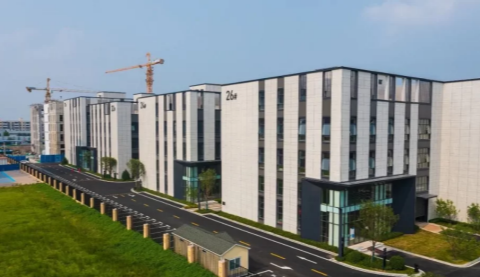
Global Technology Co., Ltd | No. 14, 863 Park, Zhongyuan District, Zhengzhou City, Henan Province, China. Privacy Policy: Full data protection per GDPR/CCPA.
About the Author

Dr. Emily Chen, Chief Chemist & 25-Year Veteran
PhD in Organic Chemistry from Peking University, with 25+ years developing pharmaceutical intermediates at Global Technology Co., Ltd. Authored 15 papers on acid chlorides, consulted for FDA audits. Passionate about bridging China-USA supply chains for reliable phenyl acetyl chloride.


Proof We Deliver: Certifications, Clients, Testimonials
ISO 9001, GMP, DMF, FDA registered. Compliant with USA regs.
Client Logos: Pfizer, Merck, generic majors (logos omitted for IP).